

Two courses, ten lessons each
Foundations of Reading Music
Start from zero: the stave and clefs, letter names, note values, rests and ties, the bass clef, accidentals, five-finger practice, major scales with both hands and fingering, triads, block and broken chords and arpeggios — with full theory and musical terms — reaching an intermediate standard.
Includes play-along & sing-along backing tracks in every course, with tempo & key control, a live score and record-yourself feedback from Jason.
+ 7 more lessons
Advanced Sight-Reading & Theory
Inversions, seventh chords, wide ranges, fingering, lead sheets, voice leading and full-score reading to an advanced level.
Includes play-along & sing-along backing tracks in every course, with tempo & key control, a live score and record-yourself feedback from Jason.
+ 7 more lessons
Gospel courses · Beginner & Intermediate · 6 lessons each
£300 per course, or any two Gospel courses for £500 (mix levels or instruments).
Available once you've bought any standard course
Gospel Lick LibraryCompare courses
Which level suits you?
Both syllabuses side by side. If most of the left column feels familiar, start with the right.
Beginner → Intermediate
Foundations of Reading Music- 1The Stave, Ledger Lines & Note NamesThe stave, ledger lines, letter names A–G, clefs, Middle C & treble clef notes
- 2Letter Names on the Stave & Your InstrumentWhite notes, bass clef lines & spaces, notes beyond the stave
- 3Crotchets, Minims & Time SignaturesCrotchets, minims, bars, barlines & 4/4 3/4 2/4
- 4Semibreves, Dotted Minims, Quavers, Rests & Ties4-beat, 3-beat and ½-beat notes, rests & ties
- 5The Bass Clef, Octaves, Semitones & AccidentalsF clef, two clefs, octaves, tones, ♯ ♭ ♮
- 6Five-Note PracticeEvery finger / every pitch, C to G
- 7The Major Scale FormulaT T S T T T S & C major
- 8Major Scales in Different KeysG, F, D and key signatures
- 9Naming Scales: Numbers, Letters & Sol-fa1–8, A–G, Do–Do & new scales
- 10Triads, Block & Broken Chords, ArpeggiosTriads, block & broken chords, arpeggios & harmony
Intermediate → Advanced
Advanced Sight-Reading & Theory- 1Triads & InversionsChord shapes across the grand staff
- 2Seventh Chords & VoicingsFour-note colours
- 3Ledger Lines & Wide RangesReading far above & below
- 4Scales, Arpeggios & FingeringFingering numbers 1-5
- 5Chord Symbols & Lead SheetsComping from symbols
- 6Advanced Rhythm & Cross-RhythmTwo-against-three at the keyboard
- 7Voice Leading & Multiple VoicesIndependent lines on one staff
- 8Minor Keys & ModulationChanging key at the keyboard
- 9Ornaments, Dynamics & PedalingExpressive detail
- 10Full Piano Score Sight-ReadingBoth hands, everything at once
"The lessons finally made sheet music click for me — I can read and play what I hear."
A JT Hub learner · Beginner → confident reader
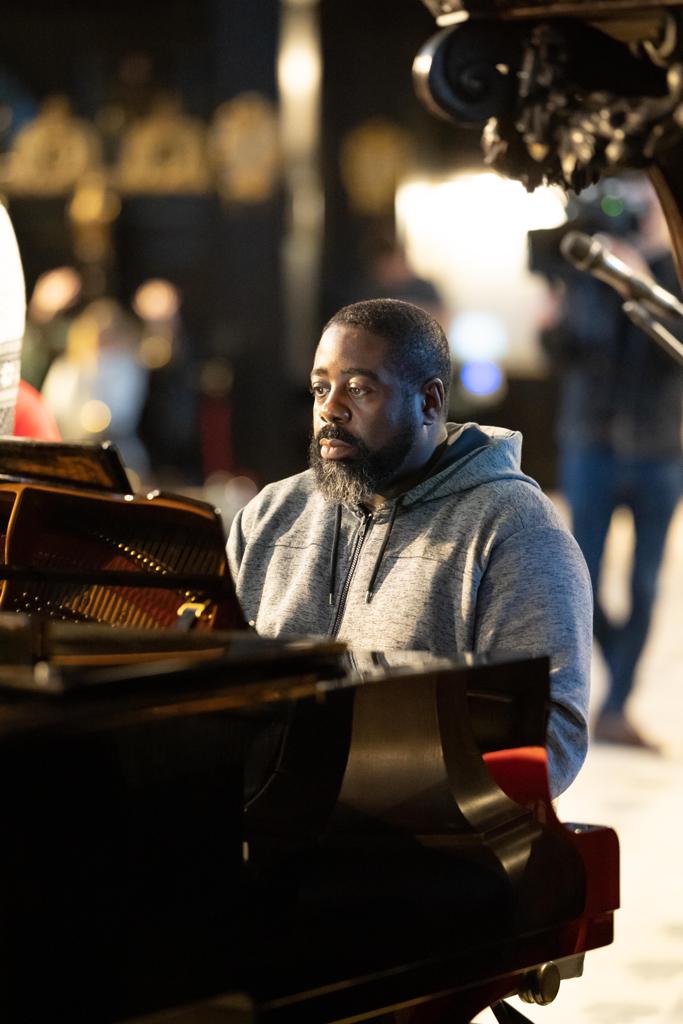
Jason in action
Jason on keys — live, in church and on stage
See all 12 videos
Good to know